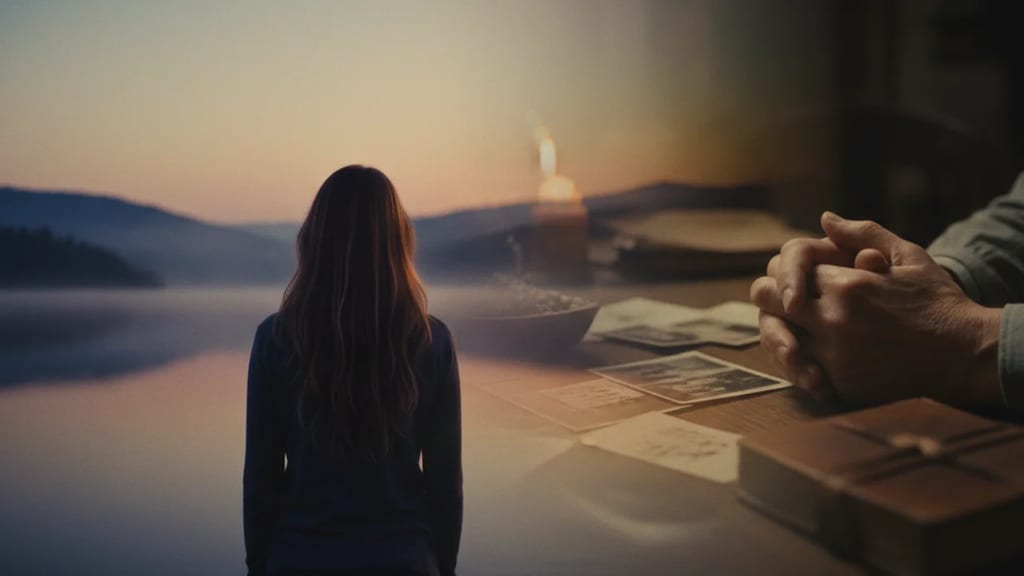
Soft cut: dissolves, fades, overlaps—gentle, associative, stretches time. Hard cut: instant image switch—rhythmic, aggressive, precise. Choice controls pace and emotional tone.
The editing rhythm determines how a sequence breathes. When switching between images, one has two fundamental tools: either one lets one frame transition directly into the next, or one works with a form of transition in between. This distinction is not an academic exercise – it fundamentally shapes the tempo, emotional temperature, and narrative clarity of a scene.
A hard cut is a direct image switch. Editing in the classic sense: one shot ends, the next begins immediately. No transitional material. This forces the viewer to reorient themselves instantly. In thrillers or action films, this works precisely – every cut is a rhythmic decision. A hard cut creates presence, immediacy, sometimes shock. In the shot-reverse-shot pattern between two actors, it generates classic dialogue dynamics. It is also used in documentaries when one wants to remain fact-oriented: cut = change of fact, no emotion in between.
A soft cut uses dissolves, fades, or crossfades – meaning a transitional frame or a gray area between two shots. This creates breathing room. Psychologically, it signals a time jump, a flow of thought, or an associative connection. In opening sequences of chamber dramas, it is used to gently draw the viewer into the world. In montage contexts – think of music videos or experimental formats – crossfades allow multiple images to be held in the viewer's mind simultaneously. This subtly extends the perceived duration.
The choice depends on several factors. Emotional Tonality: Hard cuts appear cool, precise, sometimes aggressive. Soft cuts are elegiac, reflective, dreamlike. Genre: Action can hardly tolerate dissolves (too much of a tempo killer), drama thrives on them. Plot vs. Association: Fast, factual cuts – hard. Thoughts, flashbacks, inner monologues – often soft. Editing Frequency: The more cuts per minute, the more hard cuts are needed for clarity. With slow material, soft transitions can breathe.
In practical editing, one combines them. A scene can drive the conflict forward with several hard cuts and then glide into a contemplative counter-movement with a dissolve. This is not a rule, but sensitivity. And yes – anyone who uses too many dissolves appears amateurish or kitschy. Use them purposefully, not as decorative material.
Related terms
Quiz
1. Was beschreibt „Weicher Schnitt vs. harter Schnitt" am besten?
2. Zu welchem Department gehört „Weicher Schnitt vs. harter Schnitt"?