Cinematographer
The IMAX 1.43:1 format is radically different. The camera is massive, the lens setup completely different. IMAX lighting is spectacular and brutal – the high resolution amplifies every mistake. Natural light becomes my biggest tool.
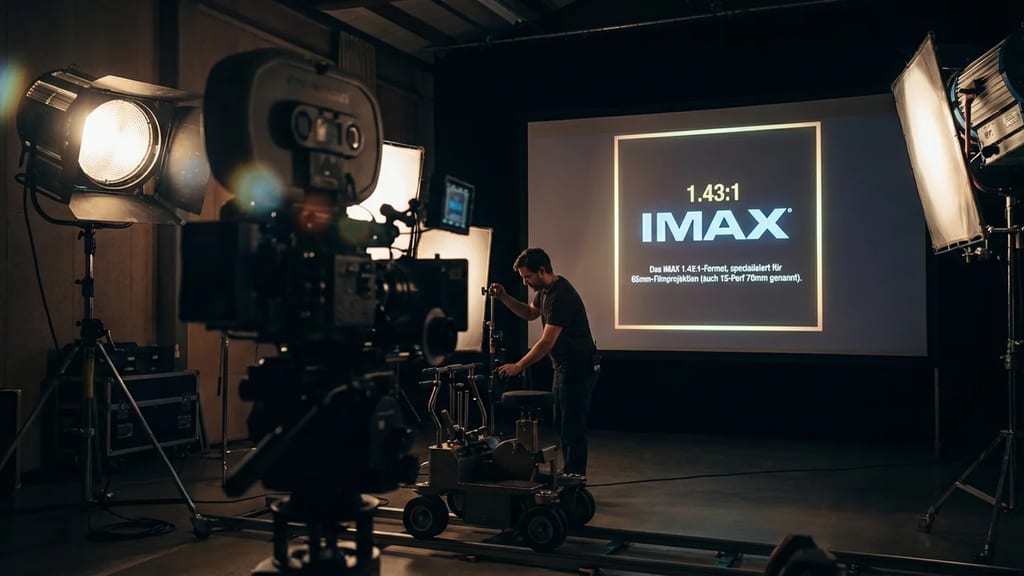
IMAX 1.43:1 format specialized for 65mm film projection (15-perf 70mm). A unique nearly-square ultra-HD format with surprising vertical image height for monumental, immersive screen experiences.
The Dark Knight was the first Hollywood feature to deliberately use IMAX 15/70 cameras for action sequences – approximately 28 minutes of the film were shot in native 1.43:1 format, demonstrating the monumental image potential of the format.
Interstellar used the IMAX 1.43:1 format for large portions of the film, turning the near-square proportion into an emotional statement: the infinity of space becomes physically tangible through the image's vertical expansion.
Dunkirk is one of the few feature films shot almost entirely on IMAX 15/70 film; the 1.43:1 format gives the war sequences an overwhelming immediacy and physicality that no other format achieves.
Oppenheimer was shot entirely on analog IMAX 15/70 film, including the first close-ups ever captured in IMAX format; the 1.43:1 image renders faces and explosions equally monumental, proving the format's unbroken expressive power in the 21st century.
The IMAX 1.43:1 format has a history independent of other studios:
Founding and Development:
Philosophy:
IMAX 1.43:1 Aspect Ratio Specifications:
Film Format:
Comparison Table of IMAX Specifications:
| Aspect | 15-Perf 65mm IMAX | Standard 35mm | VistaVision |
|---|---|---|---|
| Aspect Ratio | 1.43:1 | 1.33-2.35:1 | 1.5:1 |
| Film Width | 65mm | 35mm | 65mm |
| Image Area | 69.7 × 48.8mm | 18-24mm × 13mm | 49 × 37mm |
| Perforation System | 15 Perforations | 4 Perforations | 8 Perforations |
| Resolution (Native) | ~18K equivalent | ~2K equivalent | ~8K equivalent |
| Size Relative to Standard | 100× larger | Baseline | 5× larger |
| Projection | Mirror system | Standard | Standard |
Detailed Technical Data:
Mirror Projection System:
The IMAX 1.43:1 format is still exclusive and rare, but has seen a resurgence through Hollywood blockbusters:
Native IMAX Productions (Shot on 15-Perf 65mm):
Commercialized IMAX Versions (Remastered):
Documentary/Educational Use:
Why the Renaissance:
Why 1.43:1 and not 1.85:1 or 2.35:1?
The seemingly "squarer" proportion of 1.43:1 is actually a deliberate choice:
Example: "Interstellar"
| Format | Ratio | Film Stock | Size | Resolution | Projection |
|---|---|---|---|---|---|
| IMAX 15-Perf | 1.43:1 | 65/70mm | Massive | ~18K | Mirror |
| VistaVision | 1.5:1 | 65mm | Large | ~8K | Standard |
| 70mm Todd-AO | 2.2:1 | 70mm | Large | ~8K | Standard |
| Cinemascope 65 | 2.2:1 | 65mm | Large | ~8K | Anamorphic |
| IMAX Laser | 1.43:1 | Digital 4K | Massive | 4K + | Laser |
Modern IMAX cinemas utilize two systems in parallel:
1. Film-Based IMAX (Original):
2. Digital IMAX (2008+):
Controversy:
Why Nolan Obsessively Uses IMAX:
Christopher Nolan has repeatedly stated:
The Practical Challenge:
Trends:
Technical Standards:
Related Entries:
The IMAX 1.43:1 format is radically different. The camera is massive, the lens setup completely different. IMAX lighting is spectacular and brutal – the high resolution amplifies every mistake. Natural light becomes my biggest tool.
1.43:1 IMAX I choose for consciousness-expanding experiences. It's not for intimacy – it's for scale. Mountain landscapes, ocean horizons, cathedral spaces, the open sky. IMAX is for the sublime, the monumental.
1. Was beschreibt „IMAX-Format 1.43:1 / 15-Perf 70mm" am besten?
2. Zu welchem Department gehört „IMAX-Format 1.43:1 / 15-Perf 70mm"?
3. Wie viele verschiedene Fachperspektiven bietet dieser Eintrag?
The Lexikon is part of the Filmfarm ecosystem — alongside budgeting (FilmBalance), an industry magazine (FilmCircus) and crew networking (FilmCall, CrewMesh). One shared vocabulary for the whole production.