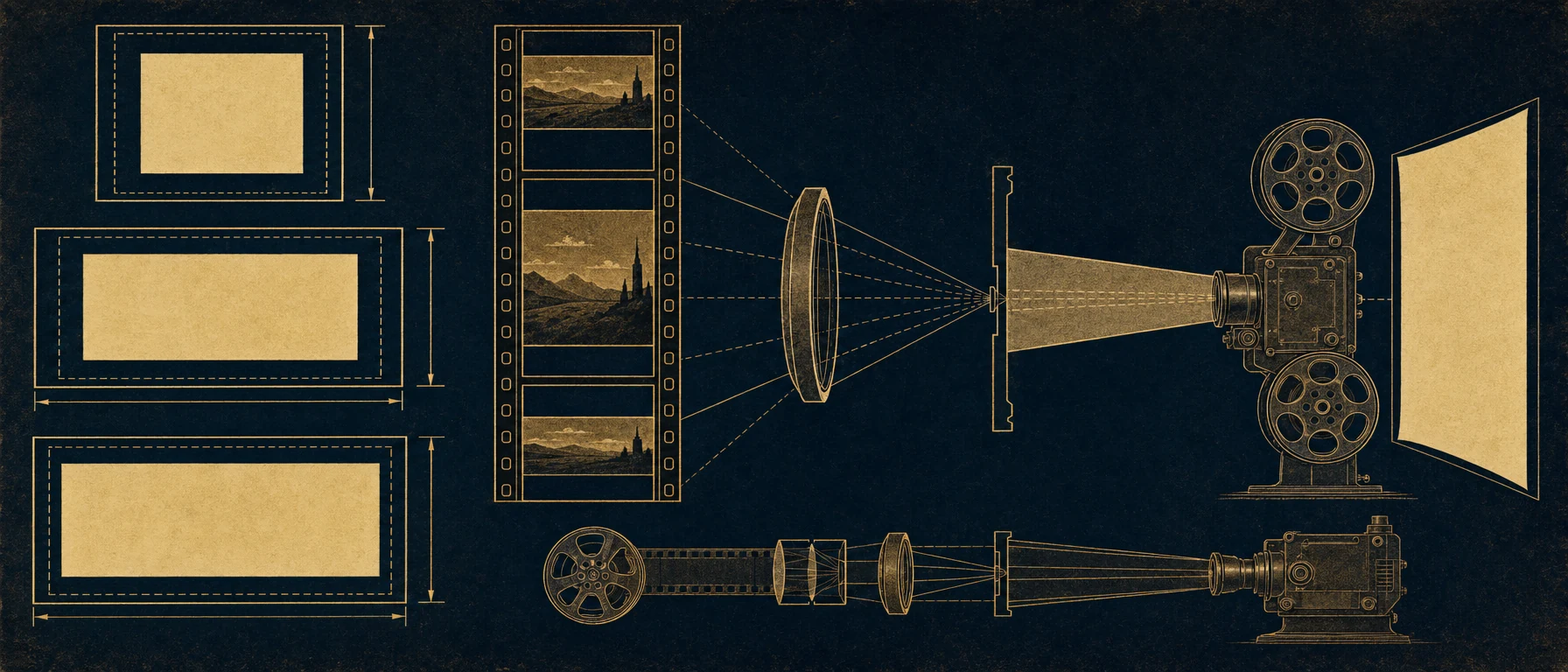
Anamorphic widescreen format introduced in 1953, using 2x squeeze for 2.35:1 projection.
Famous examples · Cinemascope
Lawrence of Arabia
Freddie Young's anamorphic photography of the Arabian desert uses the extreme widescreen format to make the solitude and vastness of space physically palpable. The horizontal breadth of the CinemaScope frame is not merely a stylistic choice here but a dramaturgical necessity.

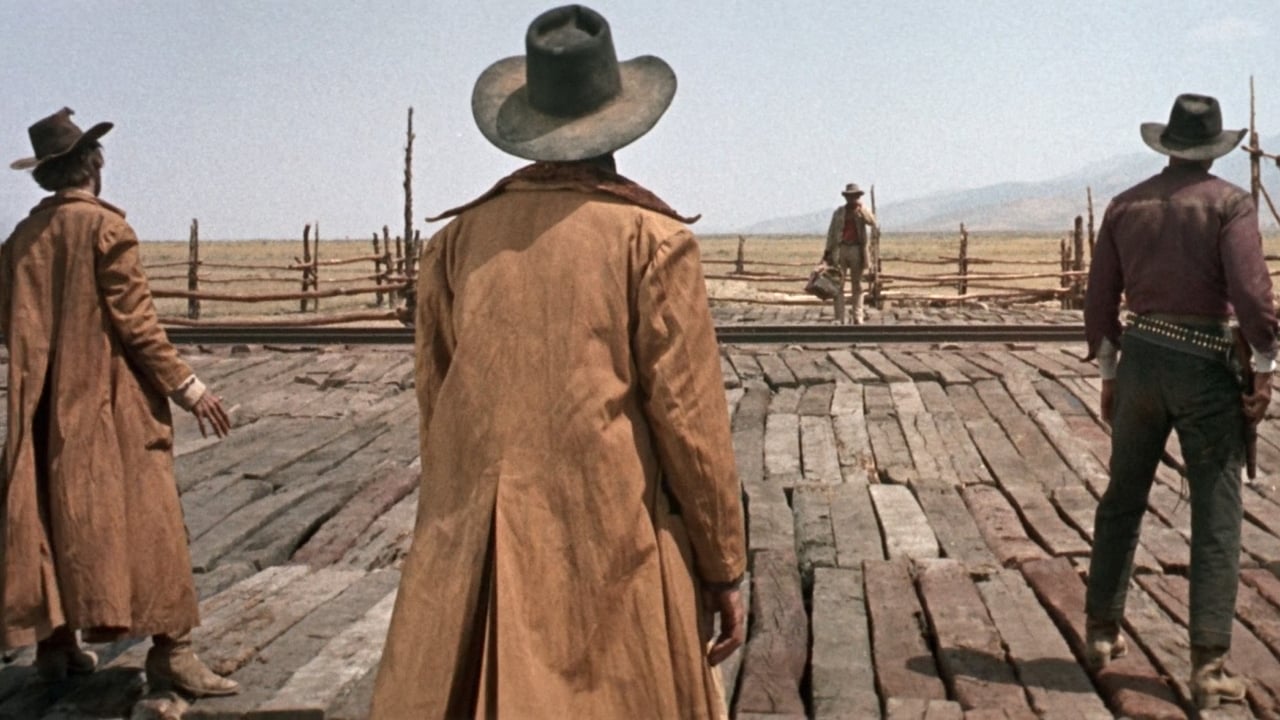
Once Upon a Time in the West
Leone and Delli Colli master the paradoxical strength of the CinemaScope format: extreme close-ups of faces that simultaneously encompass the epic breadth of the American West. The anamorphic lenses produce characteristic elliptical bokeh that renders the image unmistakable.
Blade Runner 2049
Roger Deakins shot the film on anamorphic lenses to emphasize the crushing vastness of a dystopian world – figures appear tiny within a horizontally stretched universe. The choice of the CinemaScope format underscores the protagonist's thematic isolation within an overwhelming environment.

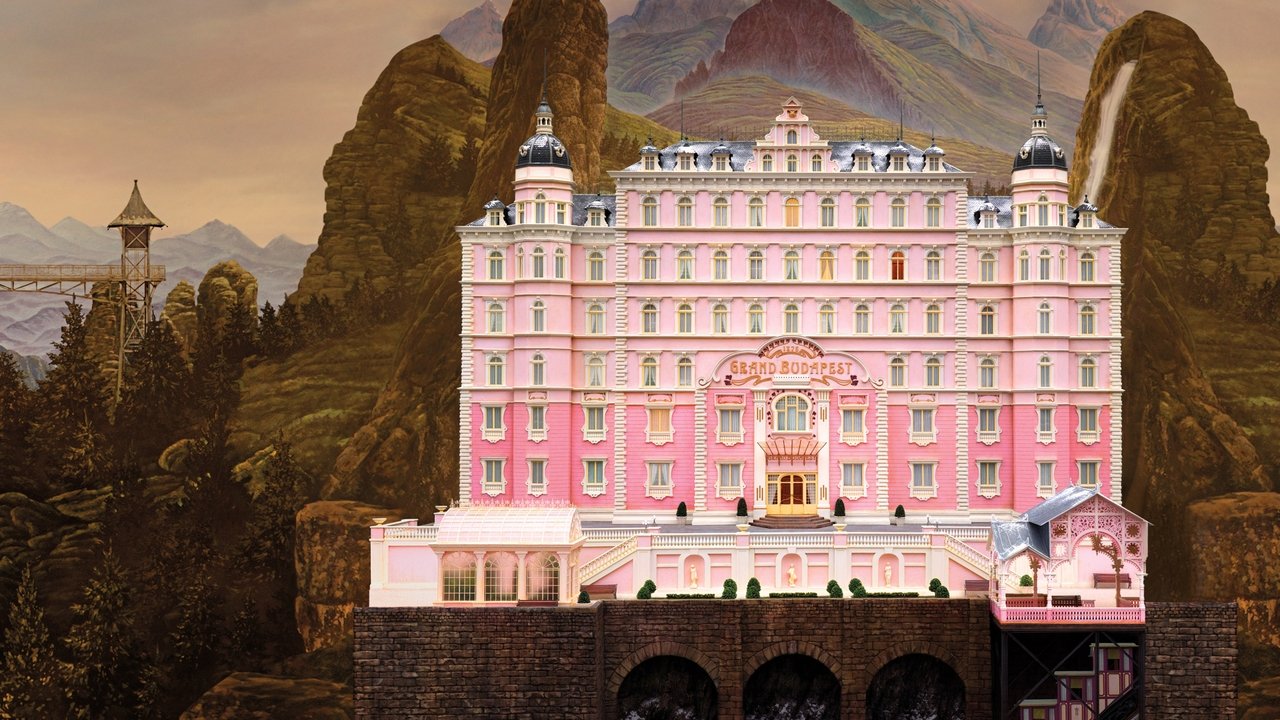
The Grand Budapest Hotel
Wes Anderson deliberately uses three different aspect ratios as historical markers, with the 2.35:1 CinemaScope format designating the 1960s narrative layer. This reflexive use of the format turns CinemaScope itself into a signifier, referencing its cultural embeddedness within a specific era of cinema.
Film stills sourced via the TMDB API. This product uses the TMDB API but is not endorsed or certified by TMDB. themoviedb.org ›
Technische Details
Das Cinemascope-System verwendet anamorphotische Linsen mit einem Kompressionsfaktor von 2:1 horizontal bei unveränderter vertikaler Auflösung. Auf 35mm-Film entsteht ein komprimiertes Bild mit einem Verhältnis von 1,18:1, das bei der Projektion auf 2,35:1 gestreckt wird. Die ursprüngliche Variante nutzte vier Magnettonspuren, was das Seitenverhältnis auf 2,55:1 erweiterte. Moderne Versionen arbeiten mit optischen Tonspuren und dem standardisierten Format 2,39:1. Das System erzeugt charakteristische horizontale Lens-Flares und erfordert präzise Kalibrierung der Optiken.
Geschichte & Entwicklung
Henri Chrétien entwickelte das anamorphotische Verfahren bereits 1926 unter dem Namen "Hypergonar". Fox erwarb 1952 die Rechte und brachte 1953 "The Robe" als ersten Cinemascope-Film in die Kinos. Paramount folgte mit "VistaVision", MGM mit "Camera 65". In den 1960ern etablierte sich Panavision als Marktführer für anamorphotische Systeme. Heute verwenden digitale Kameras wie die Arri Alexa oder RED-Systeme moderne anamorphotische Linsen von Panavision, Cooke oder ARRI.
Praxiseinsatz im Film
Klassische Cinemascope-Produktionen wie "Ben-Hur" (1959) oder "Lawrence von Arabien" (1962) nutzten das Format für spektakuläre Landschaftsaufnahmen. Moderne Filme wie "Blade Runner 2049" oder die "Star Wars"-Sequels setzen anamorphotische Linsen für den charakteristischen Look ein. Das Format eignet sich besonders für Actionsequenzen, Landschaften und Ensembleszenen, erschwert jedoch Nahaufnahmen und erfordert aufwendige Bildkomposition. Der ovale Bokeh-Effekt und die horizontalen Lens-Flares prägen die Bildästhetik erheblich.
Vergleich & Alternativen
Cinemascope unterscheidet sich von anderen Breitwandformaten wie VistaVision (1,85:1 durch Cropping) oder IMAX (1,43:1) durch die anamorphotische Verzerrung. Super 35 erreicht ähnliche Seitenverhältnisse durch digitales Cropping ohne optische Verzerrung. Moderne Alternativen umfassen digitale anamorphotische Effekte in der Post-Production oder speziell entwickelte Sensoren wie der Panasonic Varicam LT. Streaming-Anbieter bevorzugen oft 2:1-Formate als Kompromiss zwischen Breitwand und 16:9-Displays.